OLD MILL DISTRICT

MASTERPLAN

employed by: wph architecture inc.
OLD.MILL, WPH, 1998.

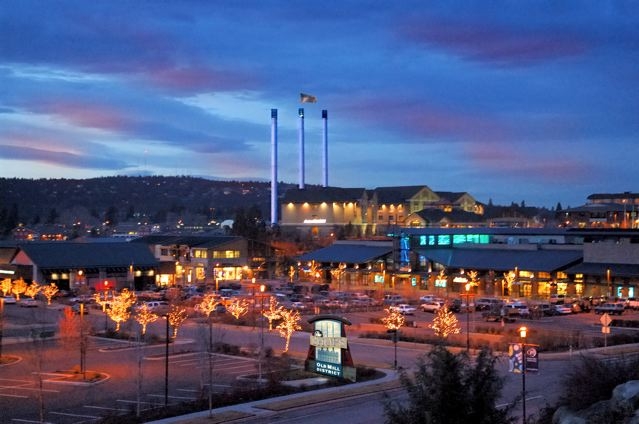
We provided site design and building conceptual design for a specialty retail center in Bend, Oregon in collaboration with Ken Kay Associates of San Francisco and Mayer Reed of Portland.

OLD.MILL, WPH, 1998.

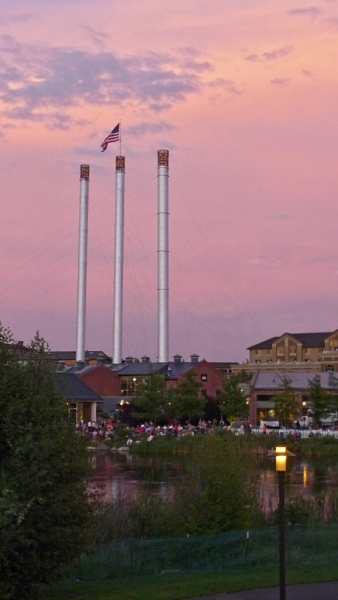
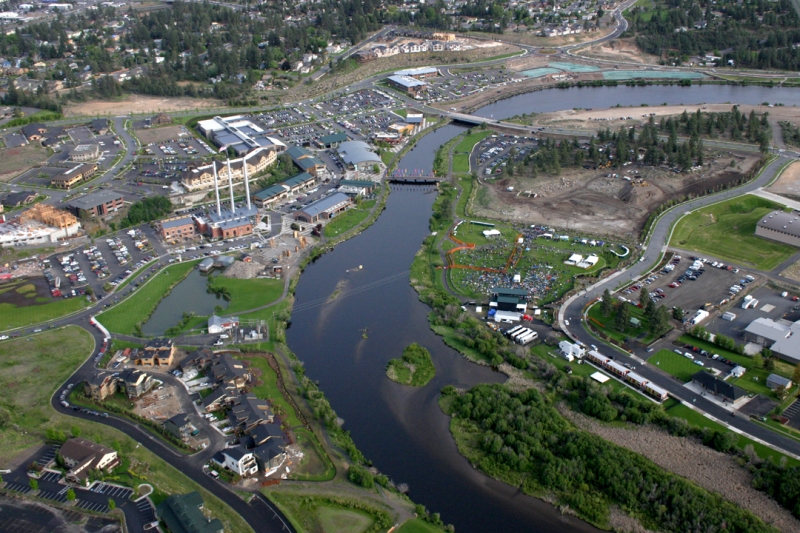
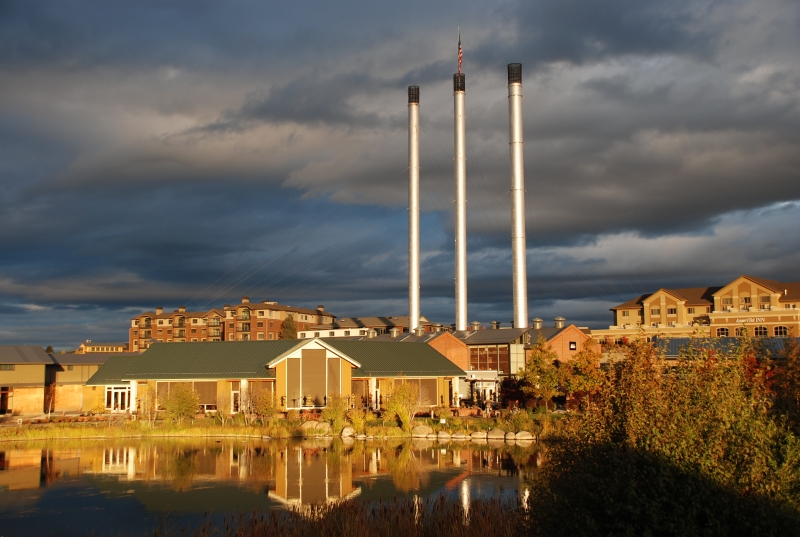
On the banks of the Deschutes River, this property offered rich opportunities to weave together the backdrop of the surrounding mountains with the foreground of the river and historic mill buildings.

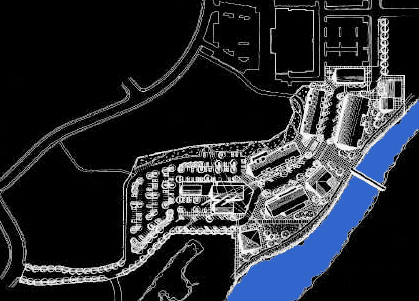
Our approach was to arrange the eight buildings parallel to the river, backing to an overlooking bluff, and create a series of street spaces focusing on views to the river and mountains between the buildings, a central court created at the foot of the bridge crossing the river, and a forecoart to the restored Powerhouse building.


OLD.MILL, WPH, 1998. OLD.MILL, WPH, 1998.

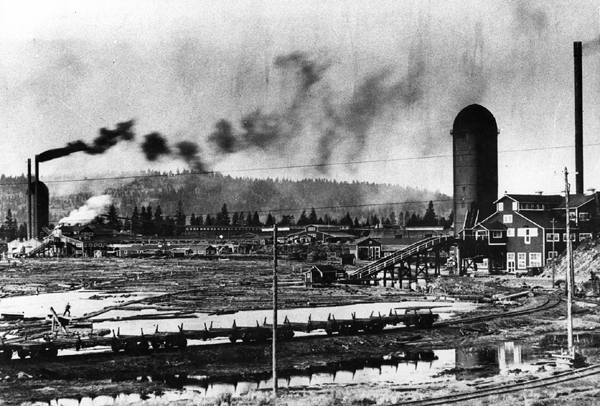
For nearly a century, timber production was the unchallenged king in Bend, most of it taking place in the Old Mill District. Hardy men used axes, crosscut saws, horses, and "high-wheel" rigs to cut down huge Ponderosa pines in the surrounding forests. The first of the big mills, operated by the Shevlin-Hixon Co., opened in March 1916. A month later a rival company, Brooks-Scanlon, began operations at its "Mill A" complex on the other side of the river. In 1922 Brooks-Scanlon established a new, bigger mill complex upstream from Mill A. This "Mill B" site makes up the largest portion of the Old Mill District. At their peak, the Brooks-Scanlon and Shevlin-Hixon operations were two of the largest pine sawmills in the world, running around the clock and employing more than 2,000 workers each.

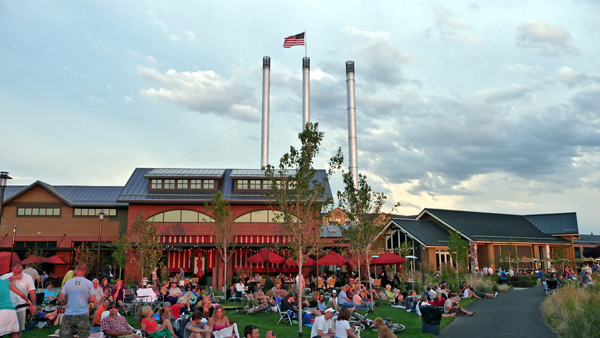
In 1950, facing dwindling timber supplies, Shevlin-Hixon sold its interests to Brooks-Scanlon. Brooks-Scanlon's Mill A closed in 1983 and was in a state of near ruin before being restored in the early 1990s. The old brick powerhouse buildings and their three towering smokestacks still stand, silently testifying to the district's colorful past.

This master plan has transformed a former 270-acre mill site along the Deschutes River to a new award winning mixed- use community. Two miles of the well-know Deschutes was closed off to public access for more than 80 years until this master plan was approved. The new community, now 90 percent completed, recycled two vacant sawmills as the centerpiece of a district for living, shopping, and dining near the heart of town. The district’s mixed-use village center, employment district, riverwalk, waterfront plazas, and footbridges allow people to enjoy the river for the first time in generations. A riverfront amphitheatre has become Bend's most popular gathering spot and concert venue.


OLD.MILL, WPH, 1998. OLD.MILL, WPH, 1998.

Recognizing this innovative combination of land recycling and natural resource restoration, the Central Oregon Environmental Center gave our client, Bill Smith, its “Earth Hero” award. In 2002 the Old Mill District received a Phoenix Award from the U.S. Environmental Protection Agency for excellence in brownfield development.


PROJECT: old mill district masterplan
CLIENT: river bend, lp + william smith properties, inc.
LOCATION: bend, oregon
BUDGET: not disclosed
SIZE: 270 acres
TEAM: wph architecture inc.: john wright, tony brizendine, brian laramee, and fredrick h. zal
kpff consulting engineers, interface engineering
DATE: 1998
OLD.MILL, WPH, 1998.