
A balanced mixture of native and ornamental plants blooming during the Summer in Oregon
|
Xeri-Scaping
|
|
a landscaping concept, which
emphases drought-resistant plants and the creation of micro-ecology systems that
symbiotically work together to enhance soil nutrients, stability, air quality
and each other through entire seasonal and life-cycle balance.
If we did not inhabit the Earth; it
is what would naturally occur across all land and water masses. Plants
sprout, flower, grow and die in
differing cycles, so that water usage is optimized, nutrients are fixed
for the roots of the next generation of plants and there is a proliferation of colors according to the types of insects and/or birds
that would be in the area at that season.
Devastations, such at the New
Orleans flooding of 2005, remind us that we should design with nature, not in
opposition to its natural cycles.
|
|
Z
|
Dionysus, you know all about gardens and nature; what in the world is going on down there in the U.S.? What happened to the dandelions, violets, thistles and the stuff I started eons ago? I had a perfect no-maintenance garden plan. Those plants grow in any type of soil, withstand drought, and multiply with abandon. The nectar from the long-lasting blossoms attracts butterflies, honey bees and flocks of songbirds. I expected to see a vast garden of color by now. All I see are patches of green?!?!?!
|
|
D
|
It's the tribes that settled there,
Zeus. They are called the Suburbanites. They started calling your flowers 'weeds' and went to great lengths to kill them and replace them with grass.
|
|
Z
|
Grass? But it is so boring, it's not colorful. It doesn't attract butterflies, bees or birds, only grubs and sod worms. It's temperamental with temperatures. Do these Suburbanites really want grass growing there?
|
|
D
|
Apparently not, Sir. As soon as it has grown a little, they cut it....sometimes two times a week.
|
|
Z
|
They cut it? Do they bale it like hay?
|
|
D
|
Not exactly, Sir. Most of them rake it up and put it in bags
|
|
I was originally taught about Xeriscaping
by my professors at the University of Pennsylvania:
|
Z
|
They bag it? Why? Is it a cash crop? Do they sell it?
|
|
Andropogon
Associates and other Lawrence Halprin / Ian McHarg enthusiasts.
|
D
|
No Sir, just the opposite. They pay to throw it away.
|

|
"Design with Nature"
by Ian L. McHarg was
originally published in 1969. It is now available as
ISBN: 047111460X.
|
Z
|
Now let me get this straight...they fertilize it to make it grow and when it does grow, they cut it off and pay to throw it away?
|
|
D
|
Yes, Sir.
|
|
Z
|
These Suburbanites must be relieved in the summer when we cut back on the rain and turn up the heat. That surely slows the growth and saves them a lot of work.
|
|
D
|
You aren't going to believe this
Sir, but when the grass stops growing so fast, they drag out hoses and pay more money to water it so they can continue to mow it and pay to get rid of it.
|
|
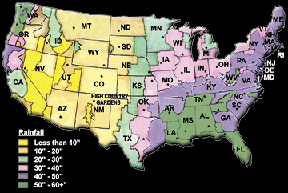
A way to get started in applying these ideas, is to take a
look at basic native planting families that you can have in your environment at High
Country Gardens. From here, you could spend years cultivating
your knowledge, and experimenting with different species.
Most
cities even have programs and tax bonuses for the use of 'native' plants,
as they cut down on the amount of water used in their
municipalities.
|
Z
|
What nonsense! At least they kept some of the trees. That was a sheer stroke of genius, if I do say so myself. The trees grow leaves in the spring to provide beauty and shade in the summer. In the autumn they fall to the ground and form a natural blanket to keep the moisture in the soil and protect the trees and bushes. Plus, as they rot, the leaves become compost to enhance the soil. It's a natural circle of life.
|
|
D
|
You'd better sit down, Sir. As soon as the leaves fall, the Suburbanites rake them into great piles and pay to have them hauled away.
|
|
Z
|
No way! What do they do to protect the shrubs and tree roots in the winter to keep the soil moist and loose?
|
|
D
|
After throwing the leaves away, they go out and buy something called mulch. They haul it home and spread it around in place of the leaves.
|
|
Z
|
And where do they get this mulch?
|
|
D
|
They cut down the trees and grind them up to make mulch.
|
|
Z
|
Enough! I don't want to think about this anymore.
Bacchus, you're in charge of the arts. What movie have you scheduled for us tonight?
|
|
B
|
"Dumb and Dumber," Sir. It's a really stupid movie about....
|
|
Z
|
Never mind....... I think I just heard the whole story from
Dionysus.
|